Category: Short Vowel Sounds

  • Mat Man and Short Vowel Word Families

    Mat Man and Short Vowel Word Families

    Question #1:

    1. A word family is a group of words that all share a common root word. For example, the words bat, cat, hat and sat all share the root word “at.


    Question #2:

    2. Word families help your child sound out multisyllabic words more easily and improve rhyming and spelling skills.


    Question #3:

    3.Familiarity with short vowel sounds will make learning word families easier.


    Question #4:

    4. If you need more resources for teaching short vowel sounds, please check out this previous post:

    https://thevowelcoach.com/how-to-teach-short-vowel-sounds/


    Question #5:

    5. This video can help your child learn letter sounds:


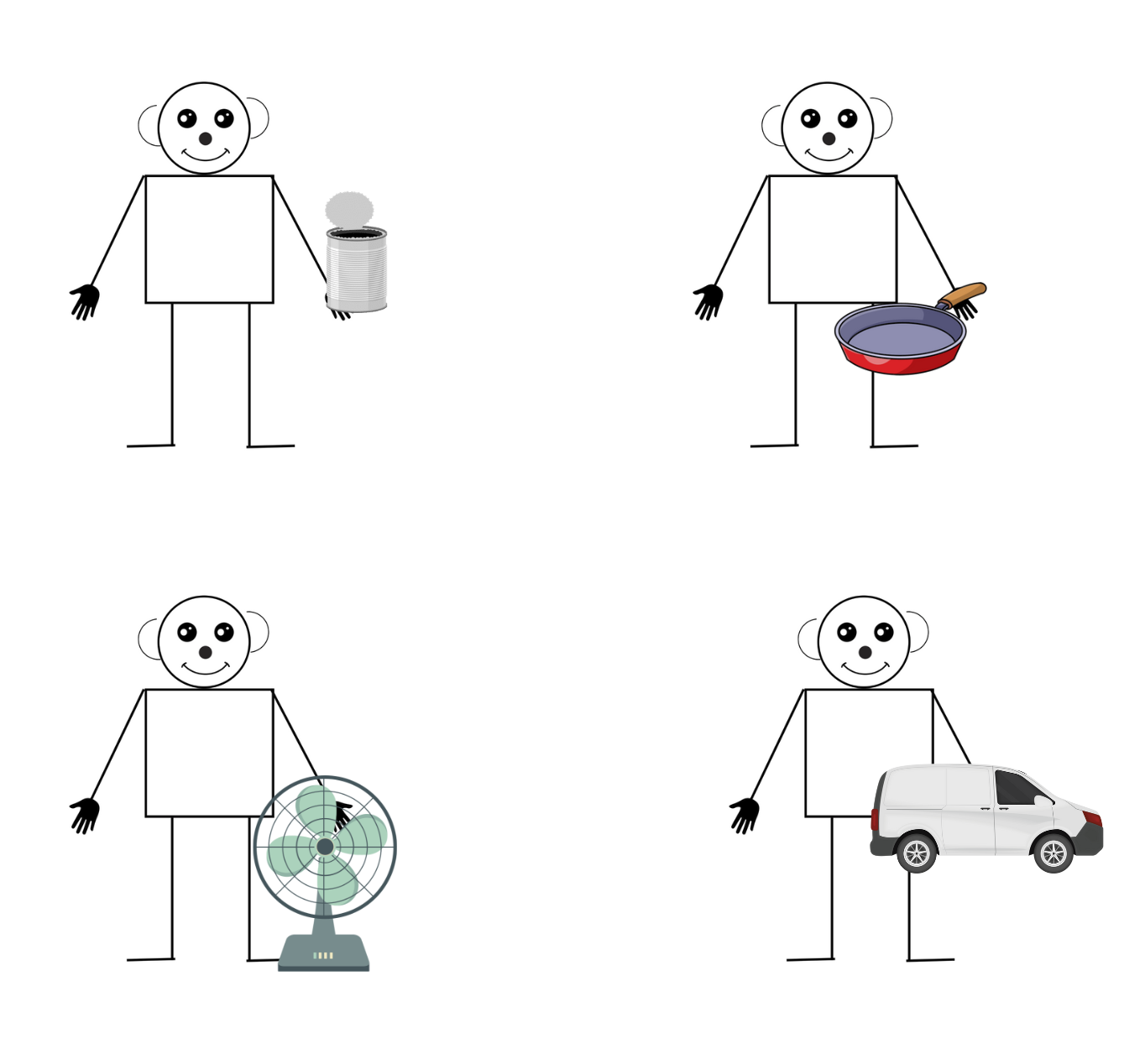
    Mat Man

    I introduce word families with my friend Mat Man. Mat Man is a character from Handwriting/Reading without Tears, and he is assembled using the types of lines we use when we print letters.

    Kids love Mat Man. My students get very excited when we use Mat Man in a lesson.

    I teach online to kids across the country, so I must rely on drawing Mat Man. Here is the video I use:


    After we draw Mat Man, I give Mat Man some props. Then we make a list of those props:

    • hat
    • bat
    • rat
    • cat

    Mat, hat, bat, rat and cat all have “at” in common. They are all part of the “at” word family.


    • can
    • fan
    • pan
    • van

    Man, can, fan, pan, and van all have “an” in common. They are all part of the “an” word family.


    Here is a look at Man Man in the classroom:


    You can purchase a Mat Man kit here:

    https://shopping.lwtears.com/product/build-mat-man-kit/01t4V000007a32SQAQ

    You can learn more about Mat Man here:

    https://www.lwtears.com/blog/meet-mat-man?srsltid=AfmBOooEZ-GT4-ykIvHy0MtcWdfgj5SDcG4q_Bmf8zEO9p7EyLivq3DC


    Here is one more Mat Man song that my students really enjoy:


    After my kids meets Mat Man and have some fun with him, we move on to a word family rhyming activity. Do you remember this song from when you were in school?


    Banana Fana Rhyming

    After the song, we create some Banana Fana rhymes based on the word family of choice.


    Word Search

    Another fun activity is a root word word search. This type of activity gives the kids a chance to scan for little words inside strings of letters.


    My lessons always include songs and stories. Here are my word family favorites for short vowel word families:


  • How to Improve Spelling-Sound Box Strategy for Beginning and Struggling Spellers

    How to Improve Spelling-Sound Box Strategy for Beginning and Struggling Spellers

    • In this post you will learn how to use sound boxes to stretch out words and practice long vowel spelling patterns.

    Sound boxes are a helpful strategy for students who are just starting to spell words and for more experienced kids who still make a lot of spelling errors. I find them extremely helpful for practicing long vowel spelling patterns, or, as I like to say, the different ways a vowel spells its name in a word. Remember to reinforce the fact that every syllable in every word has to have at least one vowel.


    What does it mean to stretch out sounds? Take a listen!


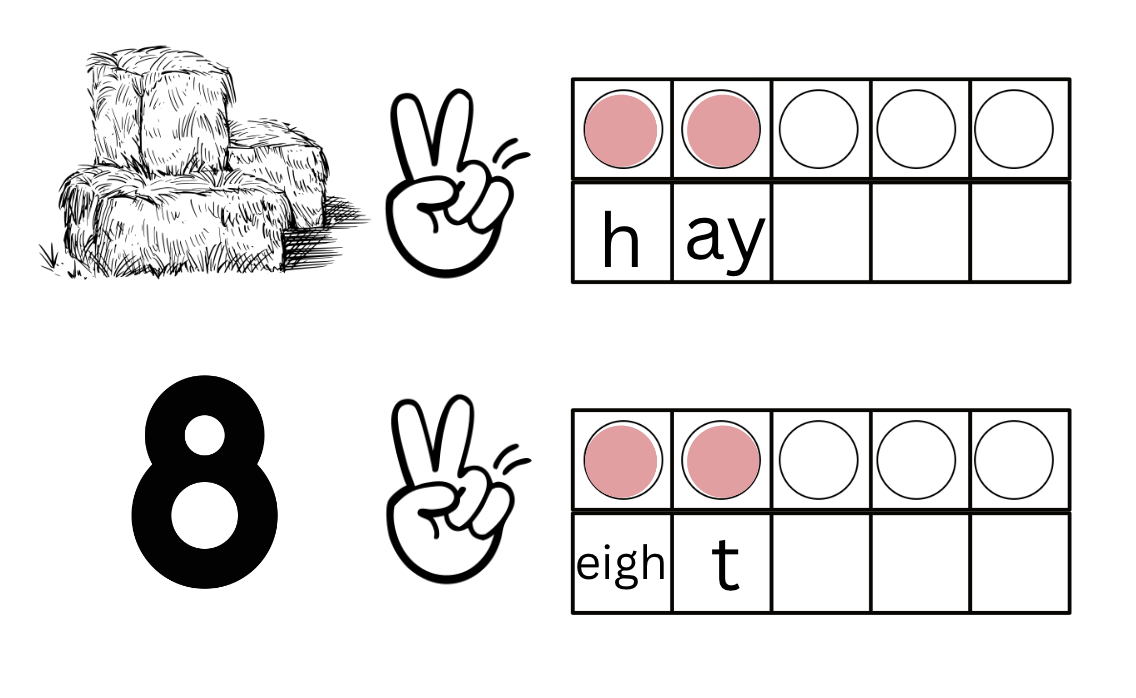
    I tutor kids online, so I rely on a simple box and circle template that looks like this:

    Here are the basic steps:

    1. Say the word.
    • “cat”

    2. Say the word slowly and count on your fingers how many sounds you hear.

    • c-a-t

    3. Color in a circle for each sound you hear.

    4. Write the letter (or letters) that correspond to each sound.

    Words with blends and/or long vowel spelling patterns are a little more complicated. For example, the word “cape” has a magic e. The magic e does not have a sound, so it does not get a colored dot. However, we still need to write the magic e.

    When it comes to vowel teams, we put both letters in the team in the same box because we need both letters to make that one sound.

    Whenever a sound is spelled using multiple letters (sh, ch, wh, etc), all the letters for that sound go in the same box.


    Here are some additional resources for your review:

  • The Importance of Teaching Short and Long Vowel Sounds- Why Vowels are The Most Important Letters in the Alphabet


    Vowels are to words what bones are to our bodies. They are the foundation for reading success.

    Phonemic awareness is the ability to identify and manipulate sounds. Vowel sounds are important for accurate reading and accurate spelling, but they are also tricky because they sound very similar to each other. For many students, the ability to identify and manipulate vowel sounds stalls their progress as readers and writers.


    Why are vowels so important?

    1. Every syllable in every word has to have at least one vowel. This is the one spelling rule that is very difficult to find rule breakers for. Examples:

    • ev-er-green
    • ab-ra-ca-dab-ra
    • Mi-chi-gan

    2. Many spelling rules are vowel dependent. 

    Examples:

    • Use tch after a short vowel and ch after a long vowel
    • In 1 syllable words use sc before a, o, and u, and use sk before i and e.
    • Use dge after a short vowel and ge after a long vowel or any other sound.

    3. Word families and common chunks usually start with a vowel.

    Examples:

    • an, ed, it, op, un

    4. Diphthongs start with a vowel.

    Examples:

    • au, ew, oi, 

    5. The name of every letter in the alphabet has a vowel sound in it. When you spell the name of the letter you usually need a vowel to spell the sound.

    Examples:

    • The name B in “because” is spelled “be.”
    • The name M in “December” is spelled “em.”
    • The name K in “okay” is spelled “kay.”
    • The name R in “park” is spelled “ar.”

    6. Long vowel sounds can be spelled in more than one way.

    Examples:

    • Long A= ai, ay, eigh, a-e
    • Long I= igh, i-e, ie, eye, -y, I

    7. Vowel rules get repeated. 

    Examples:

    • Magic e helps a, e, i, o, and u say their names. 
    • If two vowels are next to each other, the first one usually says its name

    Let’s get started!

    Here is a link to my favorite vowel song.


    Find tips for teaching short vowel sounds here:


    Find Tips for Long Vowel Sounds here:

  • How to Teach Short Vowel Sounds with Songs, Stories, and Art

    Today I am going to share the 6 steps I use to teach kids short vowel sounds. Think of each step as an ingredient in a recipe that can be personalized to match the needs of each student. Add more or less of an ingredient as needed. I teach vowels in the order A (long and short), E (long and short), I (long and short) and so on. I meet with students in 30 minute or 1 hour increments. How many steps we get through at a meeting varies from child to child.

    Here are my 6 steps for how to teach short vowel sounds:

    1. Listen
    2. Sort
    3. Read
    4. Spell
    5. Play
    6. Sketch

    STEPS 1-6 to teach short vowel sounds

    1: Listen

    I currently tutor kids in grades K-5 online in 1:1 and small group settings. We do not have shared books, so I rely heavily on a number of great free videos on YouTube.

    When I teach short vowel sounds to new readers or review short vowel sounds with more experienced kids, I always begin with a song.

    Short A song:

    Short E song:

    Short I song:

    Short O song:

    Short U song:

    2: Sort

    When I teach short vowel sounds, my second step is a sorting activity. When sorting pictures or words, I have the child listen to me say a word slowly and then repeat it back to me. I prefer to ask my students “Does the letter say its name or does it say its sound” rather than “Is it the long sound or the short sound.”

    3: Read

    When I teach short vowel sounds, I want my kids to practice reading words with those sounds. Like I said, I work with kids online, and we do not have shared books to work form. Luckily, YouTube is a great source for free material.

    I like to let my students watch the short vowel sound story for the letter we are working on first. After that, I mute the sound and then replay the story or click through the story slowly and give the child a chance to read the words. My students love these videos.

    Short A Story:

    Short E Story:

    Short I Story:

    Short O Story:

    Short U Story:


    4. Spell

    When I am teaching short vowel sounds, I want to provide my students an opportunity to spell words with that sound. For each word, I stretch the sounds out slowly and listen to the child do the same. I have the child count how many sounds she/he hears in the word. Then I draw a box for each sound and have the child add (or trace) the letter he or she hears as we sound it out again. 

    • Short A Words: cat, man, tap, land
    • Short E Words: net, bed, leg, vest
    • Short I Words: sit, lid, pin, tip
    • Short O Words: hot, mop, spot, job
    • Short U Words: run, cub, shut, hug

    5. Play

    Another activity I use when I teach short vowel sounds (or any skill) is a memory game. I’ve never come across a kids who did not want to play a memory game! I usually use pictures for the first few memory games but quickly move on to words.

    6. Sketch

    My last step when teaching short vowel sounds involves a little art. Most kids enjoy following along with the videos.

    Vowel A Sketch:

    Vowel E Sketch:

    Vowel I Sketch:

    Vowel O Sketch:

    Vowel U Sketch: