Category: Spelling

  • Best Guess Spelling

    Best Guess Spelling

    What is best guess spelling?

    Best guess spelling simply means that the child does his/her best to write down all the sounds he/she hears in a word. Best guess spelling, invented spelling, and approximate spelling all mean the same thing.

    • “My magic crayon will take me to Disney.”

    I often tell my students that reading is looking at each letter in a word and saying the sounds the letters make. Spelling is listening to each sound in the word and writing down the letter that makes each of those sounds.

    Best guess spelling is thoughtful guessing:

    1. The child must be aware that words are made up of a series of sounds and that each of those sounds is represented with a letter or group of letters.
    2. The child must be able to hear the individual sounds that make up a word and be able to record the letter(s) that make(s) each sound.

    “Good” invented spelling does not equal accurate spelling.

    In the beginning stages of invented spelling it is common for kids to only write the beginning and ending sound of a word.

    • bd=bed
    • lf=leaf
    • rt=write

    It is also very common for children to leave out vowels.

    • ltr=letter
    • splg=spelling
    • krte=karate

    A child will base her letter choices on what she hears. Because we often slur, leave out, or mispronounce sounds when we speak due to our accent, speaking speed, etc, she might “hear” a different sound than the one that is in the correct spelling of a word.

    • purfikt=perfect
    • cubberd=cupboard

    I am almost 50 years old, and I still use invented spelling. You probably do too. If you Google search, “How do you spell _____,” the combination of letters you type will be your version of invented spelling.


    Why is best guess spelling okay?

    1. One reason why best guess spelling is okay is because spelling is really tricky. For example:

    Rhyming

    • Cow rhymes with now and how but not with low.
    • Break rhymes with steak but not with streak.
    • Horse does not rhyme with worse.
    • Cord does not rhyme with word.
    • Cord rhymes with bored, but the spelling pattern is different.
    • Heard rhymes with bird but not with beard.
    • Few does not rhyme with sew.
    • Few does rhyme with Sue, but the spelling pattern is different.
    • Done does not rhyme with gone or with lone.
    • Food does not rhyme with good.
    • Paid does not rhyme with said.

    Chunks

    • Moth does not say moth in the word mother.
    • Broth does not say broth in brother.
    • Both does not say both in bother.
    • Rough does not say “ruff” in through.

    Heteronyms

    • A dove dove into the bushes.
    • She was too close to the door to close it.
    • I need to polish my Polish furniture.

    2. Another reason why best guess spelling is okay is because spelling rules have a lot of rule breakers:

    • The o in “love” makes a a short u sound even though the magic e indicates the o should say its name.
    • The a in “have” makes a short a sound even though the magic e indicates that it should be a long e sound.
    • “Heart” says “hart” even though /ea/ is a long e spelling pattern.
    • “Wednesday” looks like it should be pronounced “wed-nes-day,” but it isn’t.

    3. There are a lot of words we cannot sound out. Many sight words fall in this category:

    • are
    • does
    • talk
    • people
    • was
    • through

    Here’s some comedic relief:


    How you can help your child spell more accurately:

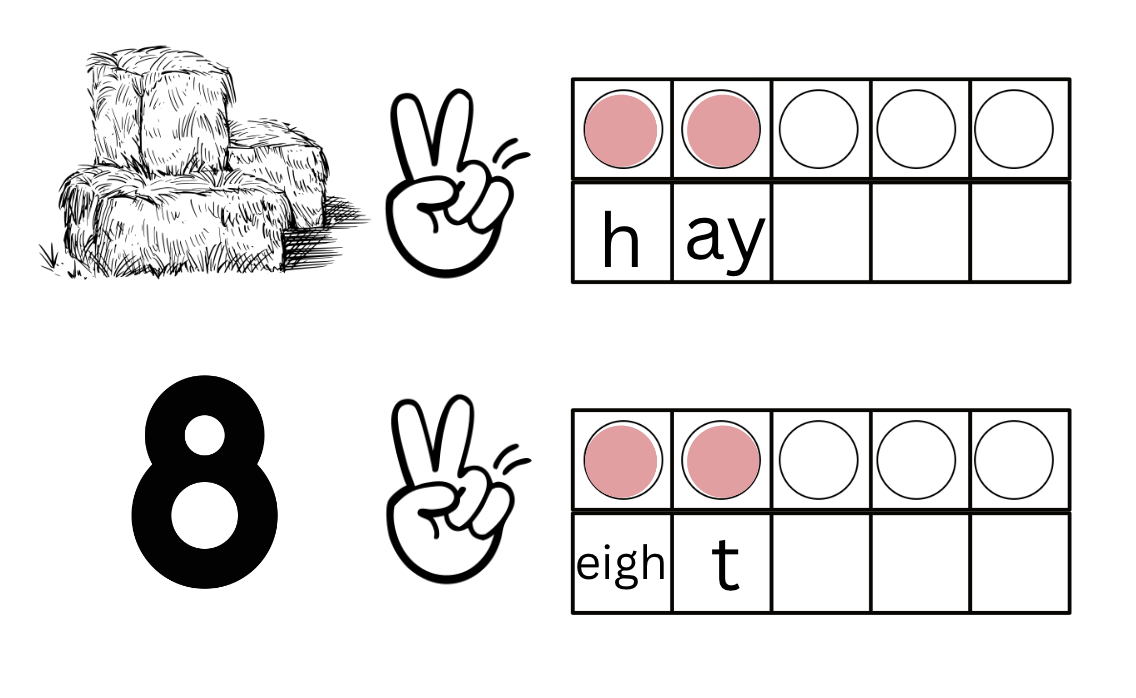
    1. Sound Boxes help children isolate the different sounds in words.
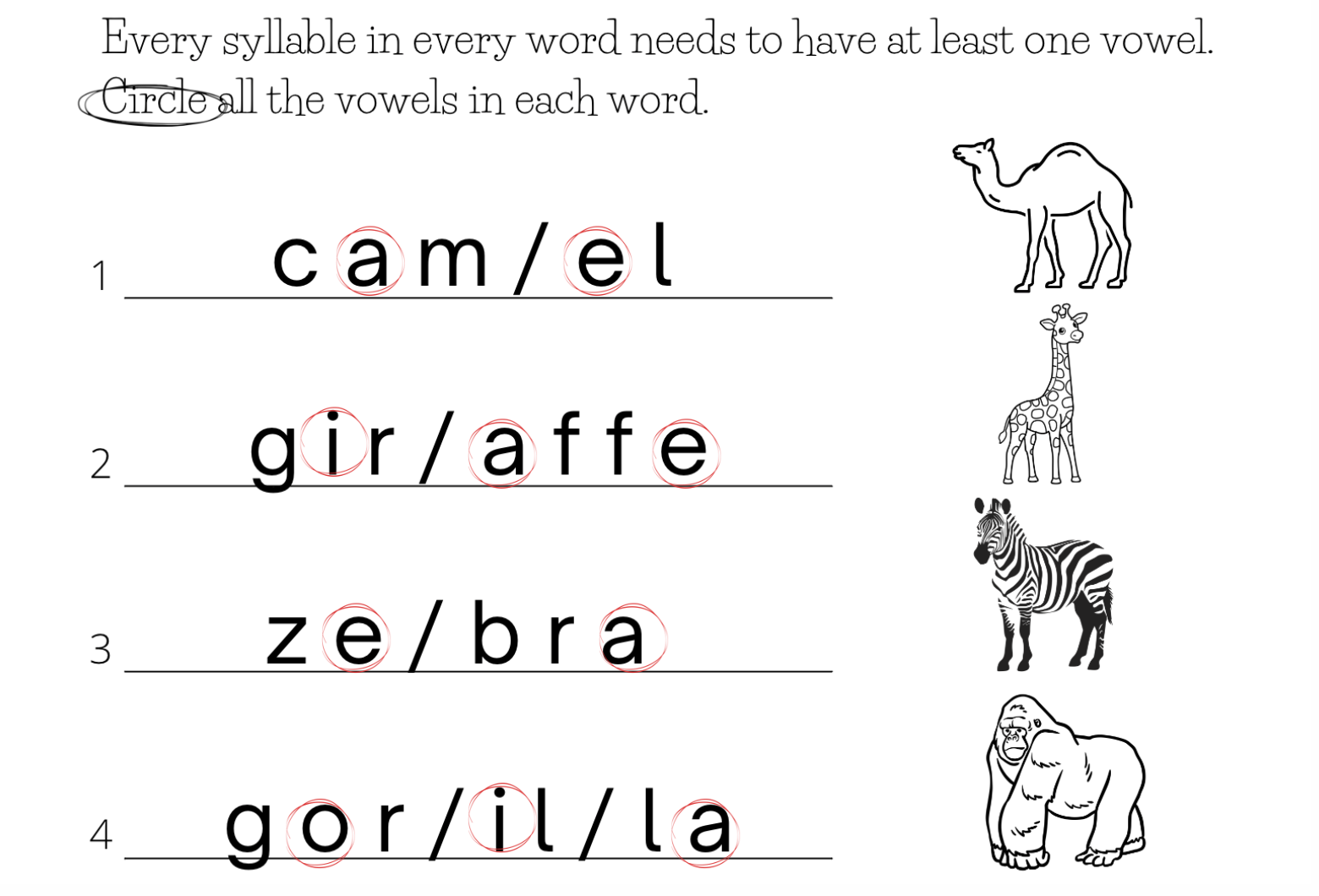
    2. Counting syllables and making sure every syllable in a word has a vowel can make a huge difference. .
    3. Vowel knowledge is essential for accurate spelling.

    Links

    Sound Boxes:


    Syllables:


    Short Vowels:


    Long A:

    Long E:

    Long I:

    Long O:

    Long U:
  • Spelling Skills: 5 Tools for Your Child’s Spelling Toolbox

    Spelling Skills: 5 Tools for Your Child’s Spelling Toolbox

    • In this post, we are going to review 5 tools needed for building better spelling skills.
    • Just like we have tools that help us cook, clean, complete our daily tasks, and take us from one location to another, there are also tools that help us learn to spell and write more accurately.

    Spelling Tool #1: Letter names and sounds:

    Reading is the ability to go letter by letter in a word and say the sounds for those letters. Writing is the ability to go sound by sound in a word and write the letters down that make those sounds. Recognizing letters and knowing their sounds is essential for building spelling and reading skills.

    Below you will find two awesome videos that have proven to be very helpful for my tutoring students. Play them often.


    Spelling Tool #2: Short vowel practice

    If you have visited my blog before, you probably know that I think vowels are the most important letters in the alphabet. I believe we should work on vowels before worrying about consonants. Because an a, e, i, o, u or y is used in every syllable of every word, vowels knowledge is critical for building spelling skills.

    If you’d like more info about why I think vowels are the most important letters, check out this post:

    Spelling Tool #3: Long vowel spelling patterns

    Long vowel spelling patterns are worth special attention. I have a post for each vowel. Find the link for Long Vowel A below.

    Spelling Tool #4: Sound boxes

    I love sound boxes. If you don’t have special sound box paper, just draw squares for your kid. Find out how to use them here:

    Spelling Tool #5: Syllables

    Focusing on syllables is extremely helpful for accurate spelling. Learn more in the link below.

    • When I introduce the Golden Rule of Spelling to a student, I always use the child’s name as the very first example.

    A final thought…

    I’d much rather see your child write sentences that have a lot of errors than be so afraid of making a mistake that he/she freezes and can’t put anything on the page. Remember that writing sentences takes a multitude of skills, and that professional writers pay people to proofread their work and fix the mistakes.

  • Learn to Read and Spell: A Guide for Parents Who Want to Help

    Learn to Read and Spell: A Guide for Parents Who Want to Help

    • Does your child want to learn to read? Is your child struggling to learn to read? This post is dedicated to parents of little ones just starting their reading journey and to the parents of older kids who struggle to read and/or spell.

    Learn to Read: Step One:

    I want to help my child learn to read and learn to spell. Where do I start?

    • Learning to read and spell starts with the most important word in your child’s vocabulary: his or her name!

    Yes: Go to number 2.

    No: Start with Name Games

    • Check out the post below for some fun ways to help your child learn to recognize and spell his or her name.


    Step 2:

    My child can recognize and spell his/her name. What is next?

    • After your child has mastered his/her name, it is time to learn to read and spell with short vowel sounds.

    Yes: Go to number 3.

    No: Start with short vowel lessons:

    • Below is a link to short vowel songs, stories and activities.

    Step 3:

    Short vowel sounds are easy, now what?

    • Once your child has the hang of short vowel sounds it is time to help your child learn to read and spell with word families. Word families include vowels and consonants.

    Yes: Go to number 4.

    No: Start with Letter sounds and Word Families:

    • Letter Sounds:
    • Below is a link to word family songs, stories and activities.

    Step 4:

    Basic word families are a cinch. Now what?

    • The next skill to address is one syllable short vowel words. Help your child learn to read and spell with CVC words. After practicing 2 letter word families, it’s time to put those word families into longer words.

    Yes: Go to number 5

    No: Work on word families:


    Step 5:

    My kid can read CVC words. What is the next challenge?

    • Hopefully your child is becoming a more confidant reader. Now is the time to help your child learn to read and spell with long vowel spelling patterns. Recognizing long vowel spelling patterns is key to accurate reading and spelling.

    Yes: Go to number 6.

    No: Work on long vowel spelling patterns.

    • Below are links to songs, stories, and activities for A, E, I, O and U.

    Vowel A: https://thevowelcoach.com/how-to-teach-long-vowel-a-different-ways-vowel-a-can-spell-its-name/

    Vowel E: https://thevowelcoach.com/how-to-teach-long-vowel-e-different-ways-vowel-e-can-spell-its-name/

    Vowel I: https://thevowelcoach.com/how-to-teach-long-vowel-i/

    Vowel O: https://thevowelcoach.com/how-to-teach-long-vowel-o/

    Vowel U: https://thevowelcoach.com/how-to-teach-long-vowel-u/


    Step 6:

    We’ve got long vowel spelling patterns down pat. Tell me the next step.

    • Reading long vowel spelling patterns is great. Now Help your child learn to read and spell by practicing writing words with long vowel spelling patterns.

    Yes: Go to number 7.

    No: Work on sound boxes.

    • Below is a link to sound box lessons:

    Step 7:

    My kid understands long vowel patterns, but his/her spelling still needs help. Now what?

    • The Golden Rule of Spelling is that every syllable in every word has to have at least one vowel. This skill deserves a lot of attention.

    Yes: Go to number 8.

    No: Work on syllables.

    • Below is a link to syllable activities:

    My kid is doing great!

  • Name Spelling Games: How to Help Your Child Learn to Spell His/Her Name

    Name Spelling Games: How to Help Your Child Learn to Spell His/Her Name

    • It is important and exciting for a child to be able to recognize and write his or her name. Below are a few strategies I like to use to help a child learn to read and spell his or her name.

    Special request:

    • Please teach your child to only use a capital letter for the first letter in his or her name. Most of the text we come across while reading and writing is in lowercase.

    1. Letter Tracing

    I highly recommend starting early with three lined printing paper. If you don’t have access to dotted letters for tracing, using a highlighter is just as easy.


    2. Rainbow Words:

    Write your child’s name with a highlighter and let him or her use multiple colors to trace the letters.


    3. Letter Scramble:

    Write each letter of your child’s name on a sticky note and mix up the order then have your child rearrange them into the correct order.


    4. What’s missing?

    Write your child’s name but leave out a letter. Ask which letter is missing. Eventually remove two or three letters and ask what is missing.


    5. Sound Matching:

    Cut out pictures or use a program like Canva to generate images. Match the pictures to the correct letter sound.


    6.Banana Fana:

    Make this silly rhyme using your child’s name. Demonstrate rhyming with this video:


    7. Happy Birthday:

    Type “Happy Birthday _____” in a YouTube search and watch funny birthday songs featuring your child’s name.

    .


    Have fun and be patient. Your child will probably also enjoy using these activities to learn how to spell the names of all of their favorite people and pets

  • Consonants and Vowels: Every Consonant Has a Vowel Sound in its Name.

    Consonants and Vowels: Every Consonant Has a Vowel Sound in its Name.

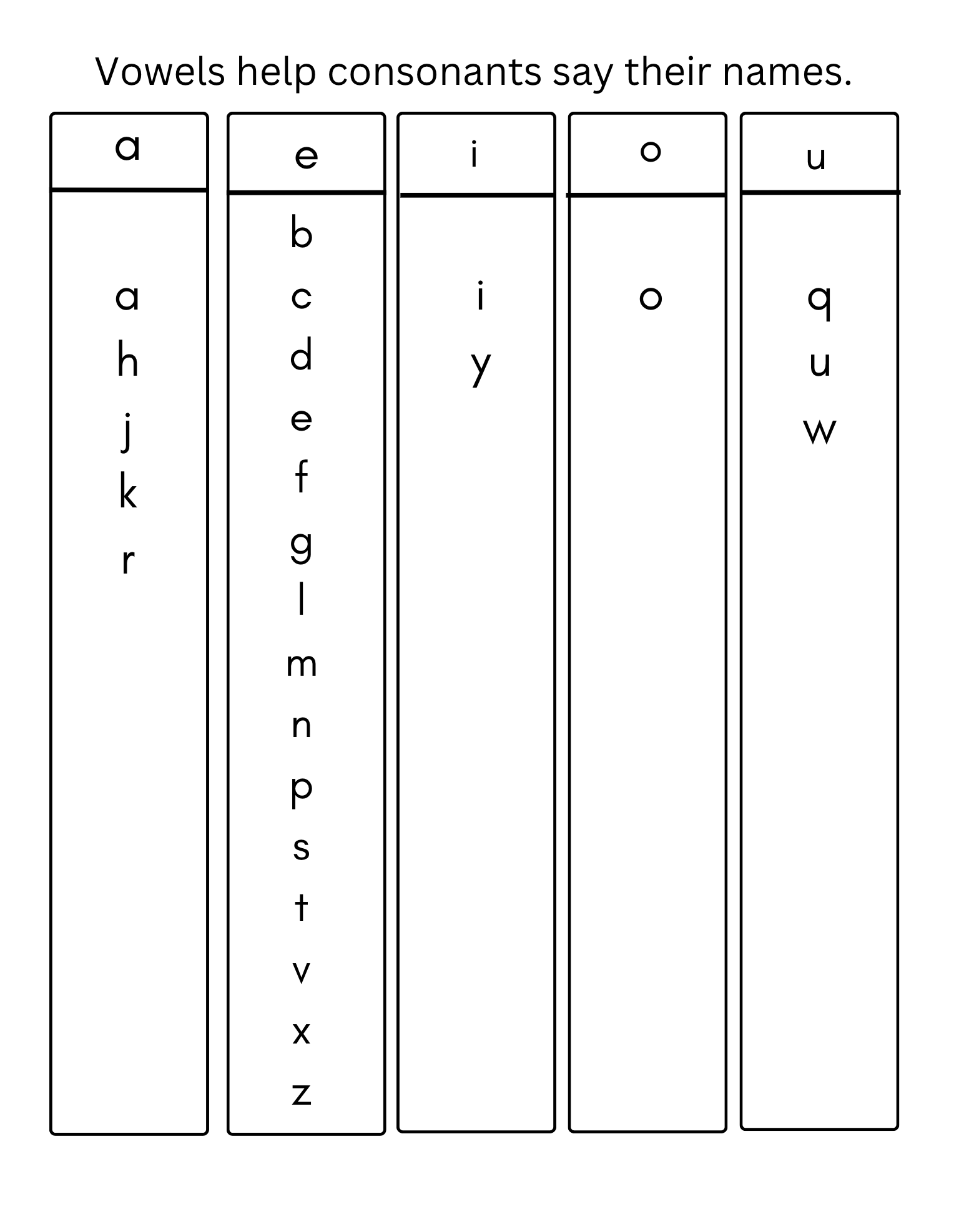
    • Today we are going to take a look at how consonants spell their names in words. When we say a consonant’s name, that name is the combination of at least two sounds. One is the letter’s sound, and the other is a long vowel sound or a short vowel sound.

    Say these consonant names out loud:

    They all contain the sound of long vowel e.


    Now say these consonant names out loud:

    They all contain the sound of short vowel e.

    .


    Understanding that vowels help consonants spell/say their names can be useful for children who struggle to spell.

    1. Say the word.

    • It’s important to have your child say the word out loud so that he or she can “feel” the sounds in his/her mouth.

    2. Stretch out the word sound by sound.


    3. If a consonant says its name, listen carefully for the sounds that make up that name.

    Your child might hear N say its name and think the word is spelled “snd.”

    If this happens, focus on the name of N and the sounds that are used to spell that name.


    4. Reinforce the golden rule of spelling:

    • Another thing we can do is ask the child if every syllable in the word has a vowel. When s/he notice “snd” is missing a vowel, we can help the child hear the vowel sound in the word.

    Below is a list of some of the common ways each letter can spell its name in a word:

    Learning to read can be fun. Be patient, give your child time to think, and turn learning into a game whenever you can.

  • How to Improve Spelling- The Connection Between Syllables, Vowels and Spelling

    How to Improve Spelling- The Connection Between Syllables, Vowels and Spelling

    Spending time on syllables can help a child:

    • Slow down
    • Hear sounds more accurately
    • Recognize common spelling patterns.
    • Strengthen decoding skills.
    • Break big words down into manageable parts


    When it comes to spelling, there are A LOT of rules.

    • magic e makes the vowel say its name
    • i before e except after c
    • when two vowels go walking the first one does the talking
    • /or/ is the “juicy sound” like in the word orange

    The problem is that all of those rules also have multiple rule breakers!

    • Finding rule breakers can be a fun activity. Of course, kids need to understand basic spelling rules in order to identify a rule breaker.

    One rule that is very difficult to find a rule breaker for is, “Every syllable in every word has to have at least one vowel.”


    I am a reading tutor. The first thing I usually do after greeting a student is ask “What are the most important letters in the alphabet?” Hopefully the response is “A E I O U and Y.”

    The next question I ask is, “Why are vowels so important?” Hopefully the response is, “Because every syllable in every word has to have at least one vowel.”


    If you want to know more about why vowels are the most important letters, check out this post:


    Counting Syllables:

    1. Say the word and have the child repeat it.
    2. Ask the child how many syllables s/he hears in the word.
    3. Make a line for the corresponding number of syllables.
    4. Have the child write down the sounds s/he hears in each syllable.
    5. Have the child mark the vowels and make sure there is a vowel in each syllable.
    • After a child writes the letters for each sound, it is time to ask, “Does every syllable in your word have at least one vowel?” If a syllable is missing a vowel, help the child “hear” what the vowel is saying.


    Here are some great videos you can use with your kids:

  • How to Improve Spelling-Sound Box Strategy for Beginning and Struggling Spellers

    How to Improve Spelling-Sound Box Strategy for Beginning and Struggling Spellers

    • In this post you will learn how to use sound boxes to stretch out words and practice long vowel spelling patterns.

    Sound boxes are a helpful strategy for students who are just starting to spell words and for more experienced kids who still make a lot of spelling errors. I find them extremely helpful for practicing long vowel spelling patterns, or, as I like to say, the different ways a vowel spells its name in a word. Remember to reinforce the fact that every syllable in every word has to have at least one vowel.


    What does it mean to stretch out sounds? Take a listen!


    I tutor kids online, so I rely on a simple box and circle template that looks like this:

    Here are the basic steps:

    1. Say the word.
    • “cat”

    2. Say the word slowly and count on your fingers how many sounds you hear.

    • c-a-t

    3. Color in a circle for each sound you hear.

    4. Write the letter (or letters) that correspond to each sound.

    Words with blends and/or long vowel spelling patterns are a little more complicated. For example, the word “cape” has a magic e. The magic e does not have a sound, so it does not get a colored dot. However, we still need to write the magic e.

    When it comes to vowel teams, we put both letters in the team in the same box because we need both letters to make that one sound.

    Whenever a sound is spelled using multiple letters (sh, ch, wh, etc), all the letters for that sound go in the same box.


    Here are some additional resources for your review:

  • How to Teach the Long Vowel U Sound

    How to Teach the Long Vowel U Sound

    • In this post you will find:

    -long vowel u spelling patterns

    -long vowel u stories

    -long vowel u songs

    -long vowel u worksheets

    -long vowel u activity ideas

    When I begin teaching the long Vowel U sound, I start with a video that shows a few ways that long Vowel U can spell its name:

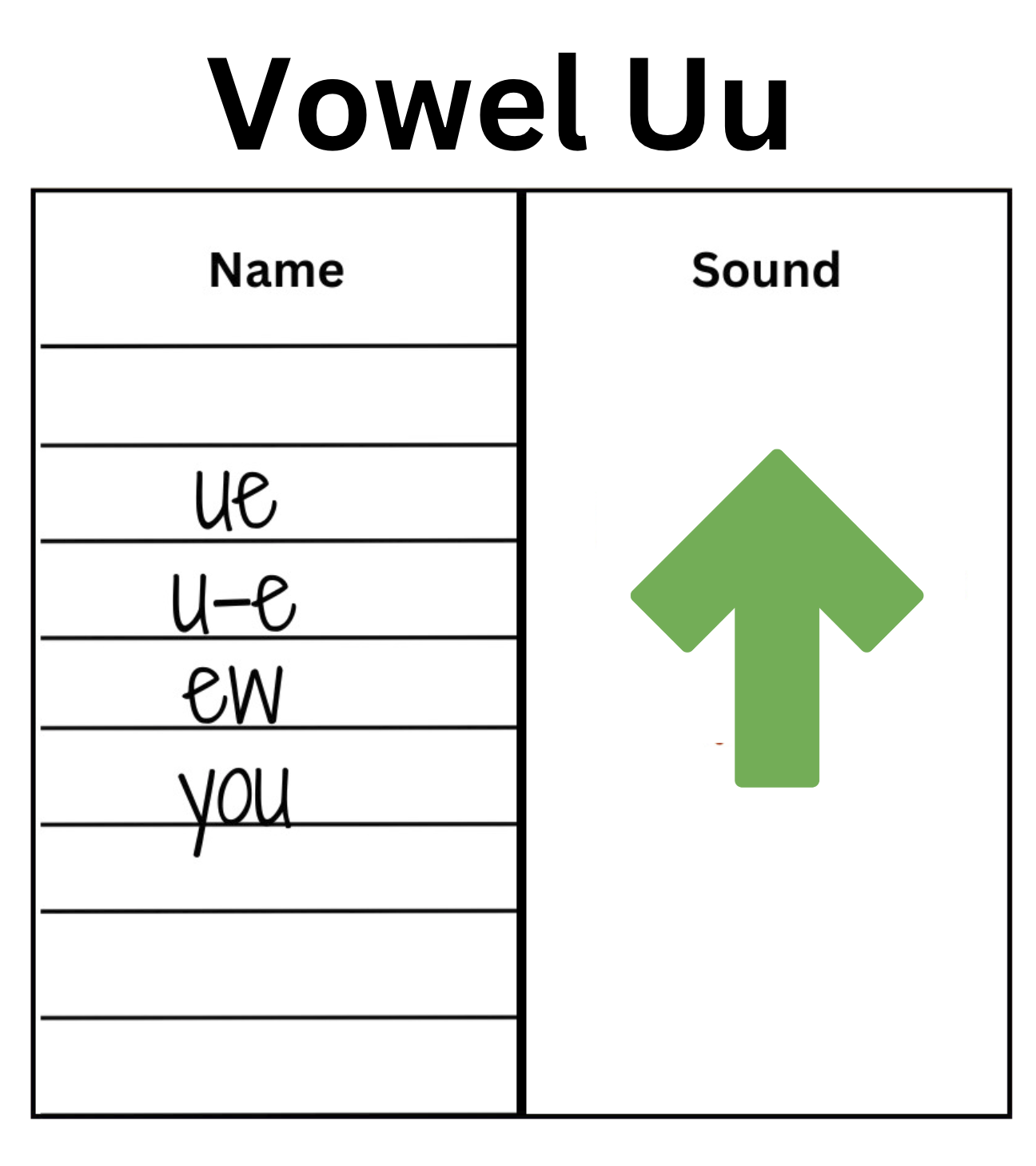
    After watching and discussing the long vowel u song, students can complete a long vowel u sorting activity. This long vowel u worksheet below can be found in my Long Vowel Packet linked below.


    • Listen to the long vowel u song: u-e


    • Read long vowel u-e words from my Long Vowel Packet or your own list.

    1. Listen to the long vowel u story. (u-e)
    2. Mute the story and allow your child to read it.

    Bonus u-e story:


    • Spell Long vowel u (u-e )words using finger counting and sound box method.

    • Play the u-e memory game from the Long Vowel Packet.

    • Extend with MULE.


    • Listen to the ue song.

    • Read the ue words from the Long Vowel Packet.

    1. Listen to the ue story.
    2. Mute the ue story and allow your child a chance to read it.

    • Spell ue words using the finger counting and sound box method.

    • Play the ue memory game.

    • Extend with GLUE.


    • Listen to the ew song.

    • Read the ew words from the packet.

    • I do not have a story for ew.


    • Spell ew words using the finger counting and sound box method.

    • Play the ew memory game.

    • Extend with STEW.

  • How to Teach Long Vowel O

    How to Teach Long Vowel O

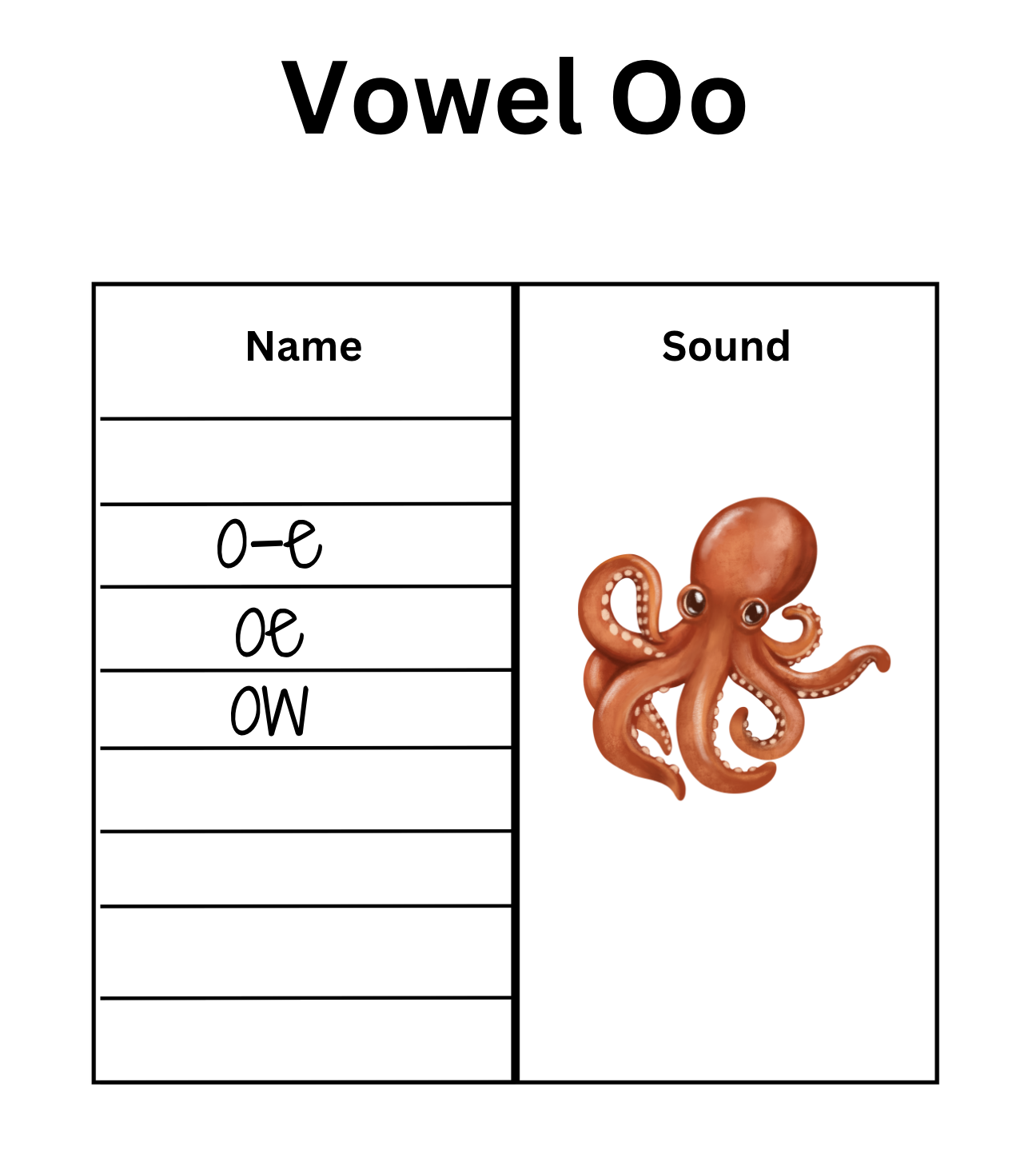
    • When I begin teaching Long Vowel O, I start with a video that shows a few ways that Vowel O can spell its name:

    Long O song:

    Follow this with my Long O word sort from the Long Vowel Packet.


    • Listen to the o-e song.

    • Read the o-e words from the Long Vowel Packet.

    1. Listen to the o-e story.
    2. Mute the story and give your child a chance to read it.

    • Have your child spell o-e words using the finger counting and sound box method.

    • Play the o-e memory game from the Long Vowel Packet.

    • Extend with BONES.


    • Listen to the oa and ow songs.

    • Read the oa and ow words from the Long Vowel Packet.

    1. Listen to the oa/ow story.
    2. Mute the story and give your child a chance to read it.

    Bonus oa/ow story


    • Spell oa and ow words using the finger counting and sound box method.

    • Play the oa and ow memory games.

    • Extend with Row your Boat.

    song #1

    Song #2

    How to draw a boat


  • How to Teach Long Vowel I

    How to Teach Long Vowel I

    • When I begin teaching Long Vowel I, I start with a video that shows a few ways that Vowel I can spell its name:

    After watching this video, have your student complete the long i word sort.


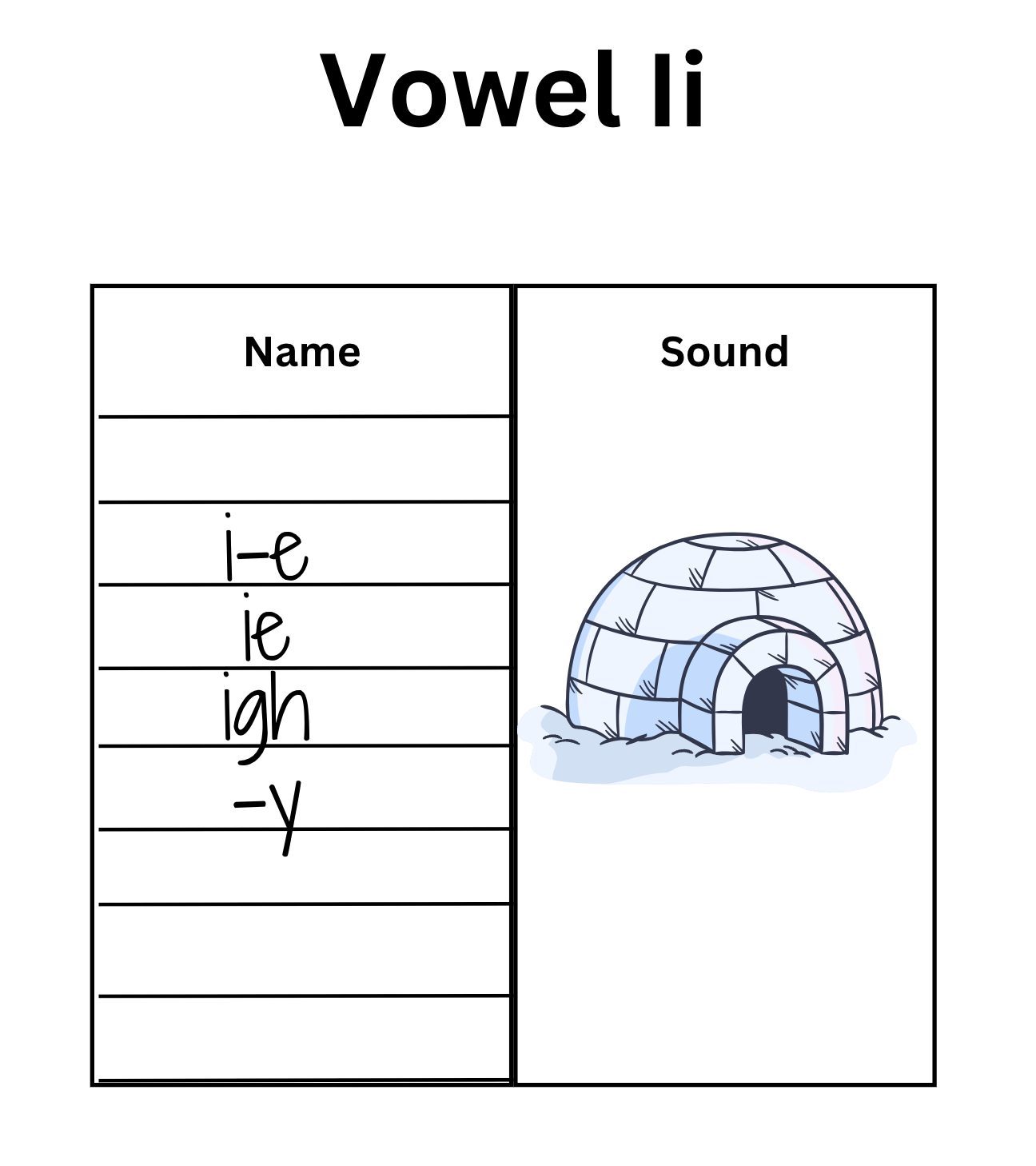
    Lets dive deeper into the ways that the vowel i can spell its name. I teach long vowel i in this order:

    i-e

    ie

    igh

    -y


    Here are the steps I use to teach long vowel I:

    1. Listen to the song
    2. Read the word cards from the packet.
    3. Watch and read the story.
    4. Spell words for that skill using the fingers/boxes method.
    5. Play the memory game.
    6. Extend the fun with the extension activities.


    • Listen to the i-e song.

    • Read the i-e words from the Long Vowel Packet.

    • First, listen to the i-e story. After that, mute the story and replay it while giving your student a chance to read it to you.

    • Have your child spell i-e words using the finger counting and sound box method.

    • Play the i-e memory game from the Long Vowel Packet.

    • Extend with KITE activities.


    • Listen to the ie song.

    • Read the ie words from the Long Vowel Packet.

    • This time we have a song to listen to one time then mute and read.

    • Spell ie word using the finger counting and word box method.

    • Play the ie memory game from the Long Vowel Packet.

    • Extend with PIE.


    Alligator Pie song


    • Listen to the igh song.

    • Read the igh words from the Long Vowel Packet.

    • First, listen to the igh story. Second, mute the story and let your child read it.

    Bonus igh story:


    • Have your child spell igh words using the finger counting and sound box method.

    • Play the igh memory game from the Long Vowel Packet.

    • Extend with LIGHT BRIGHT activities.


    • Listen to the -y song.

    • Read the -y words from the Long Vowel Packet.

    • Listen to the -y story and give your child a chance to read it. It is that same story we used for igh.

    • Spell -y words using the finger counting and sound box method.

    • Play the -y memory game from the Long Vowel Packet.

    • Extend with FLY activities.