Category: Vowels

  • E is for Essential: 10 Jobs Preformed by Vowel E

    E is for Essential: 10 Jobs Preformed by Vowel E

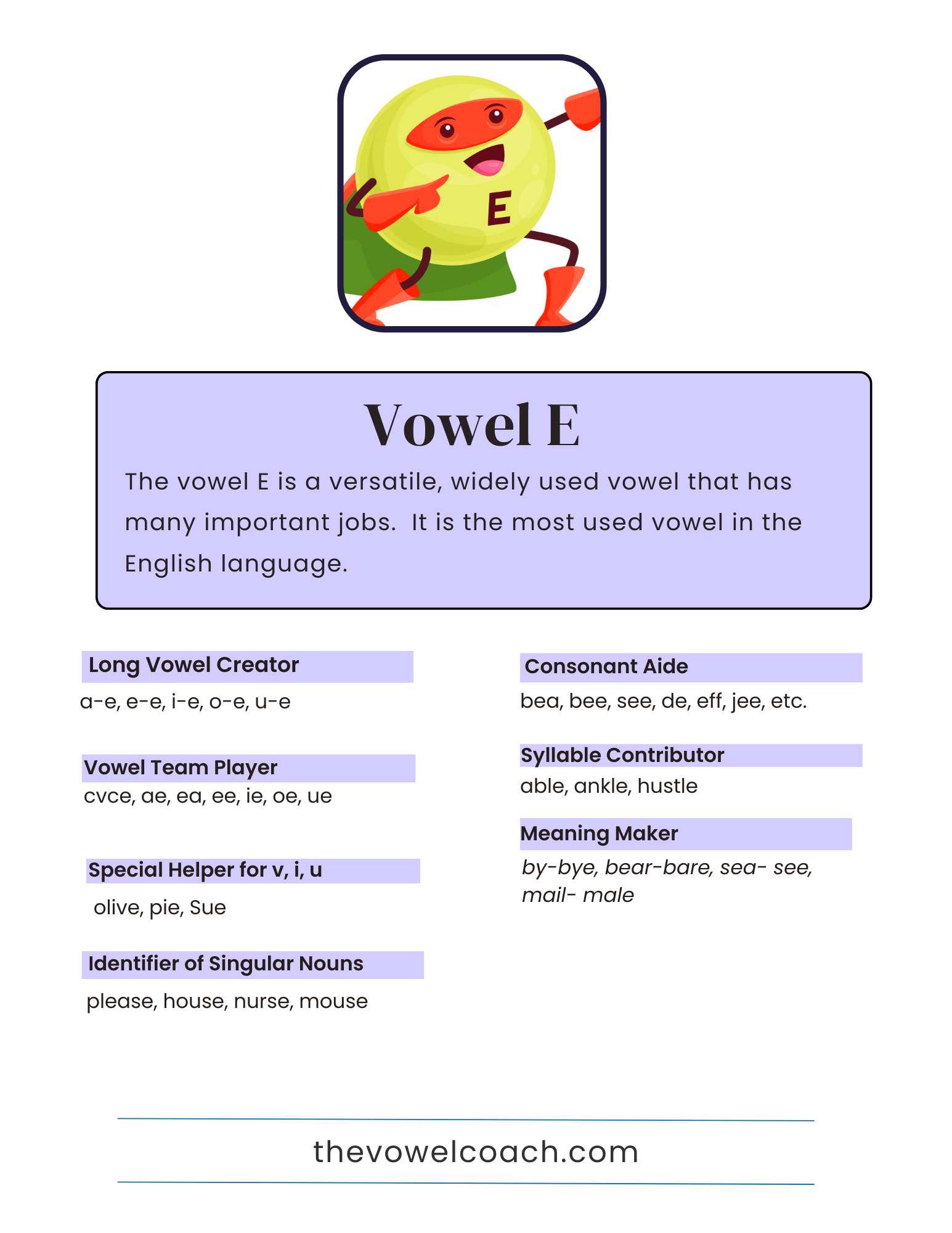
    The letter E is arguably the most important letter in the English language. It is the most commonly used vowel in spelling, and it preforms several different jobs.

    1. Magic E

    Magic E makes a vowel say it’s name. The addition of an ‘e’ changes the sound of the vowel, and it changes the meaning of the word.

    • cap/cape
    • shin/shine
    • rod/rode
    • cut/cute

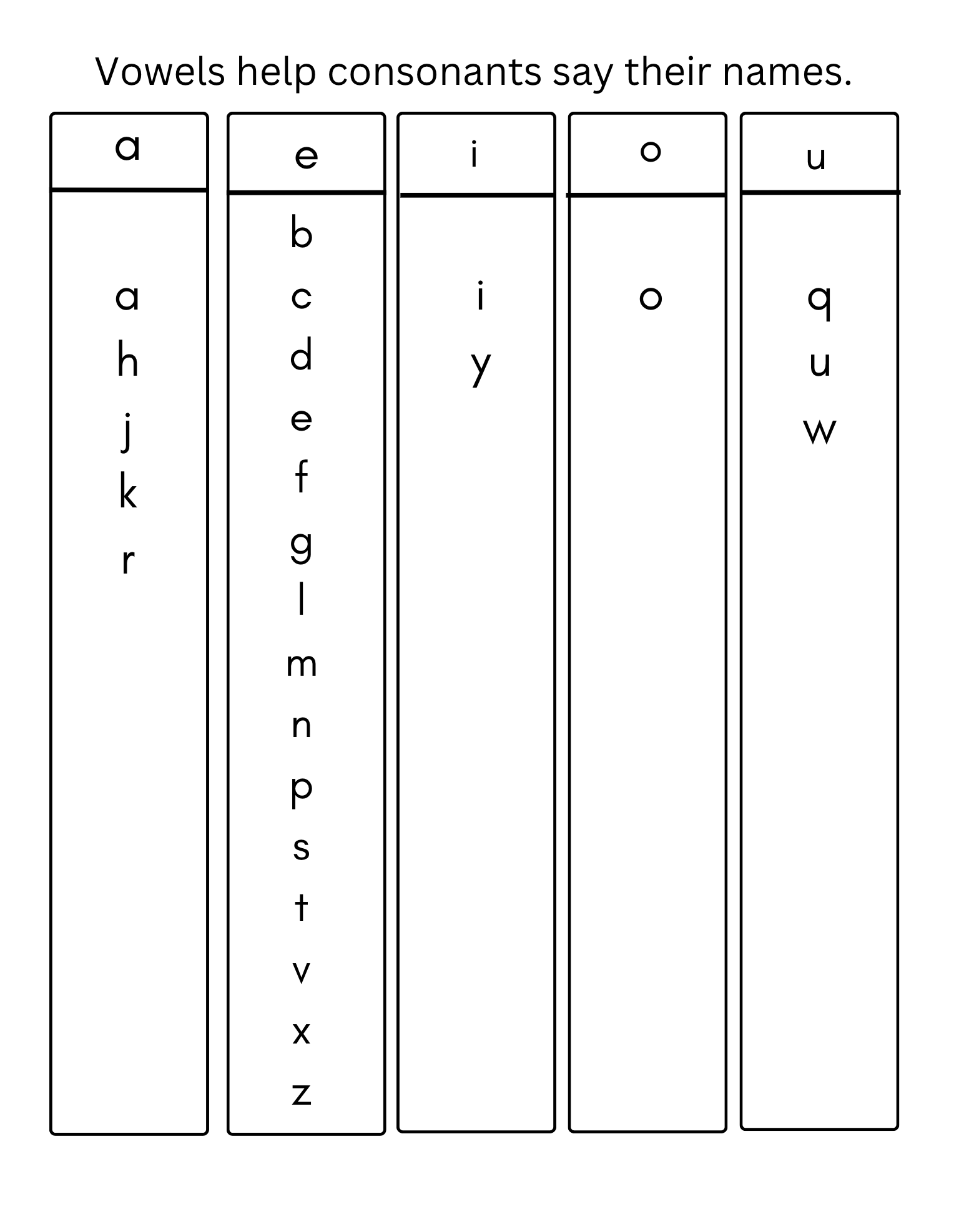
    2. ‘E’ helps many letters “spell” their names.

    • B= bee, bea
    • C= see, sea
    • D= de, dee, dea
    • E= ee, ea
    • F= ef, eff
    • G= gee, jee
    • L= el, ell, elle
    • M= em
    • N= en
    • P= pee, pea
    • S= es
    • T= tee, tea
    • V= ve
    • X= ex
    • Z= zee, zea

    3. Adding an ‘e‘ after the letters ‘c‘ makes ‘c’ say its “soft” sound.

    • ace
    • face
    • ice
    • mice
    • space
    • cent
    • celery
    • cereal

    4. Adding an ‘e‘ after a ‘g‘ makes the ‘g’ say its “soft” sound.

    • cage
    • edge
    • large
    • orange
    • page
    • gel
    • gem
    • geology
    • budget
    • pigeon

    5. English words very rarely end in the letters i, j, q, u, or v. Adding a vowel E at the end of a word keeps the letters i, j, q, u and v from being the final letter in a word.

    -ve

    • above
    • carve
    • drove
    • five
    • grave
    • olive
    • sleeve
    • twelve

    -ie

    • die
    • lie
    • pie,
    • Charlie
    • smoothie

    -ue

    • blue
    • due
    • glue
    • true
    • Sue

    6. Adding a final ‘E’ shows that a word that ends with an /s/ sound is not plural.

    • please
    • house
    • nurse
    • mouse
    • sense
    • nose

    7. Every syllable needs at least one vowel. ‘E’ adds a vowel to syllables with the consonant l+e pattern.

    • able
    • angle
    • ankle
    • article
    • baffle
    • bustle
    • cycle
    • paddle
    • title
    • whistle

    8. Vowel ‘E’ changes the sound of ‘th.’

    • bathe
    • teethe
    • tithe
    • leather
    • weather

    9. ‘Ze’ is used after a long vowel. ‘ZZ’ is used after a short vowel.

    prize vs. frizz

    maze vs. jazz

    squeeze vs. buzz


    10. ‘E’ changes the meaning of a word.

    • by-bye,
    • bear, bare
    • sea, see
    • bail, bale
    • mail, male

    Jobs of Vowel E

  • Bossy R:

    Bossy R:

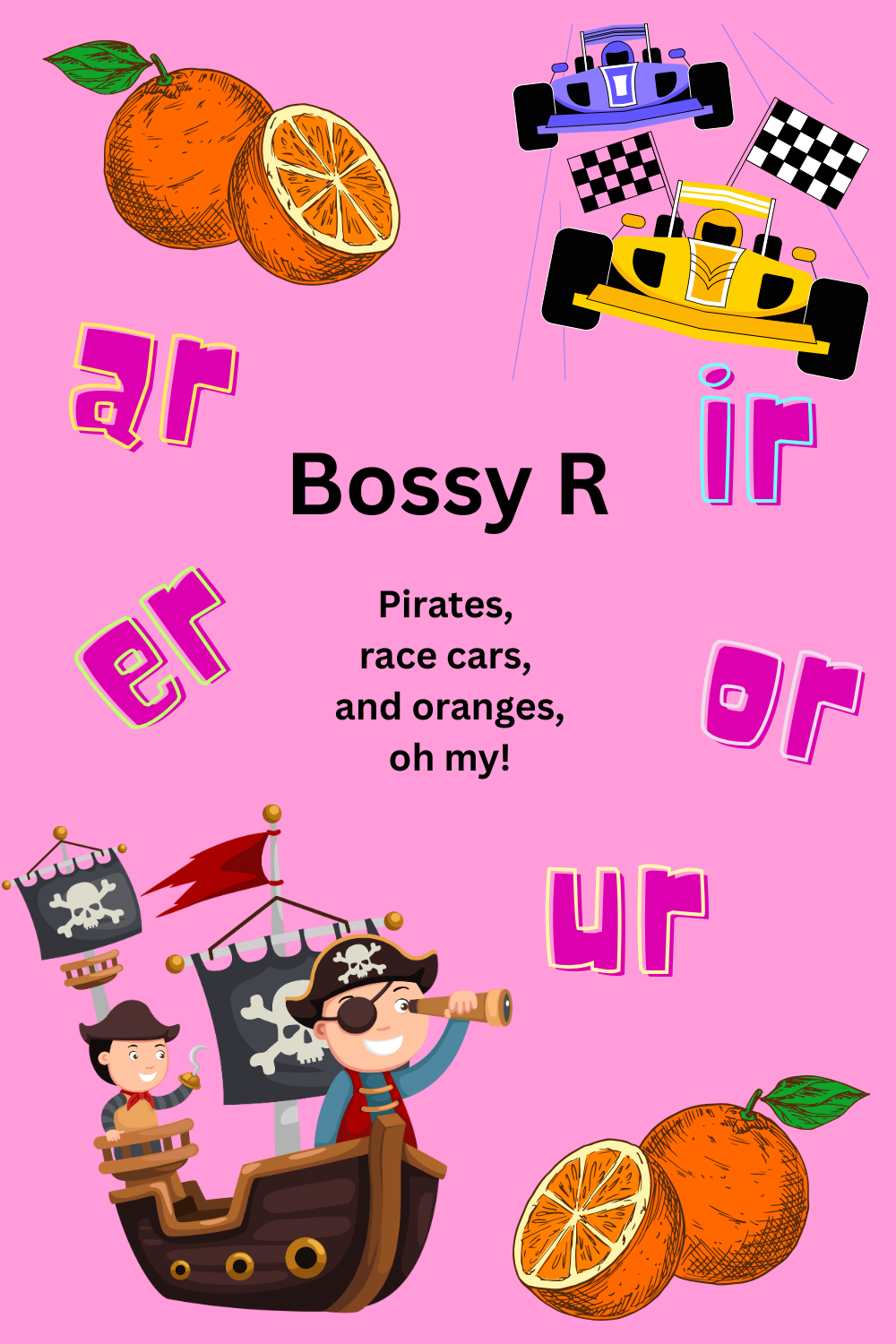
    What is Bossy R?

    A Bossy R is an R that comes after a vowel in a word. The addition of the R changes the sound the vowel makes.

    Bossy R Song:

    There are a lot of Bossy R songs on YouTube. This one happens to be my favorite.


    AR

    AR is the pirate sound.

    • Q: Why are pirates called pirates A: They just arrrrrr.
    • Q: How do pirates like to cook their steaks? A: On a barrrrrbecue.
    • Q: What does the captain keep up his sleeve? A: His arrrrmy.
    • Q: Where do pirates go for drinks? A: The sand barrrrrrr.

    AR Song:

    AR practice

    My students and I love to play memory games. It is my favorite way to reinforce reading and spelling skills. You can easily make your own memory games with index cards or cut up sheets of paper.


    ER, IR and UR all make the “race car sound.” RRRRrrrrrr……

    • Q: What did the traffic light say to the car? A: Don’t look, I’m about to change!
    • Q: Why did the car take a nap? A: It was tired.
    • Q: Why was Miss Piggy such a bad driver? A: She was always hogging the road.

    OR is the “juicy sound.”

    • Q: Why do oranges need sunblock? A: Because their skin peels.
    • Q: Why did the orange stop halfway across the road? A: Because he ran out of juice.

    Story Time

    I work with kids online, so I rely on digital books and YouTube videos for stories. I like to have the students listen to the story first. After that, we replay the story on mute and the child reads aloud.

    ER, IR, UR story

    AR and OR Story

    UR, OR story

    AR, ER, IR, OR, Ur Story:

    Bossy R Story

    Brain Pop Jr. Bossy R

    https://www.youtube.com/watch?v=2bmIuzjAVu4

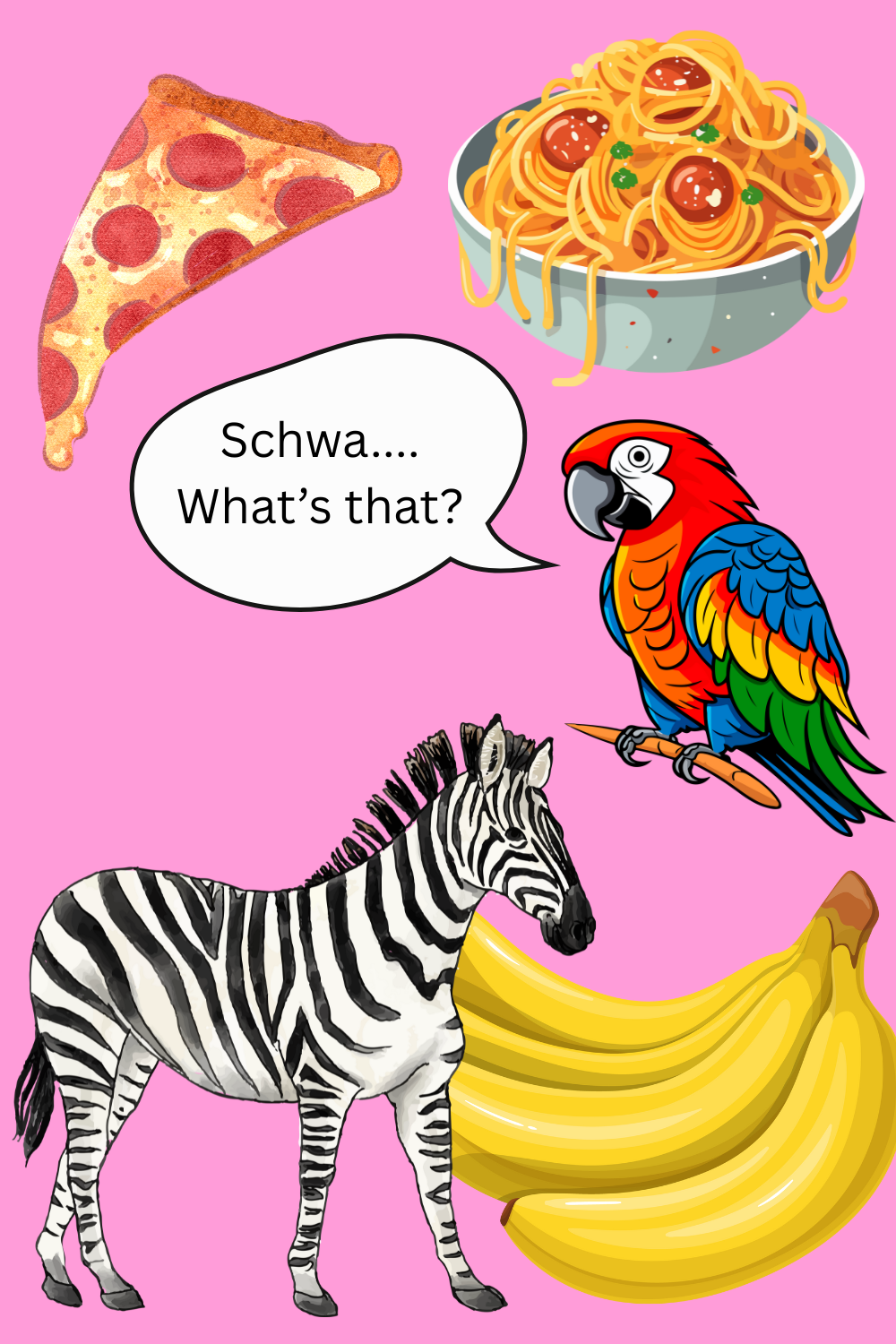
  • Schwa: It’s the vowel sound that is easy to say but hard to spell.

    Schwa: It’s the vowel sound that is easy to say but hard to spell.

    The “schwa” sound sounds like a short vowel u. It is often referred to as the lazy sound (uhhh…).

    Read the following words:

    • pizza
    • banana
    • granola
    • salsa
    • boa
    • about
    • amount
    • ago
    • away
    • award
    • zebra
    • balloon
    • alphabet
    • magazine

    Now read these words:

    • the
    • camel
    • nickel
    • novel
    • telephone

    And these:

    • bottom
    • carrot
    • freedom
    • parrot
    • gallon
    • cover
    • action
    • portion
    • lotion
    • ribbon

    Uhhh…. what’s going on here?

    Welcome to the “schwa” sound.

    The schwa sound sounds a lot like short vowel u, but it can make a short i sound as well. Any vowel can make the shwa sound, which makes spelling tricky for everyone, especially kids. English accents and pronunciations of words vary. When I say “pencil,” I can hear the short i sound. However, a lot of people pronounce the i like a short u sound, so it sound like “pensul.” The same goes for “family.” Some people will say it with a distinct short i sound, and some people will say it as if it is spelled “famuly,” and some people will pronounce it “famly.”

    Phonics Hero explains the schwa sound here:

    Schwa Tricks:

    I don’t have any tricks for which vowel to use to make a schwa sound in a given word. I think that knowing how to spell the schwa sound comes with a lot of reading and spelling practice. If you know any tricks for kids, please let me know!

    Extension Ideas

    When I work on schwa with my students, I share this poem by Shel Silverstein:

    • I use the word “boa” as an introduction to schwa.
    • What schwa foods can a boa eat? pizza, banana, granola, salsa, carrots, pasta…

  • Listen to the Vowel: 4 Vowel Rules Kids Need to Know

    Listen to the Vowel: 4 Vowel Rules Kids Need to Know

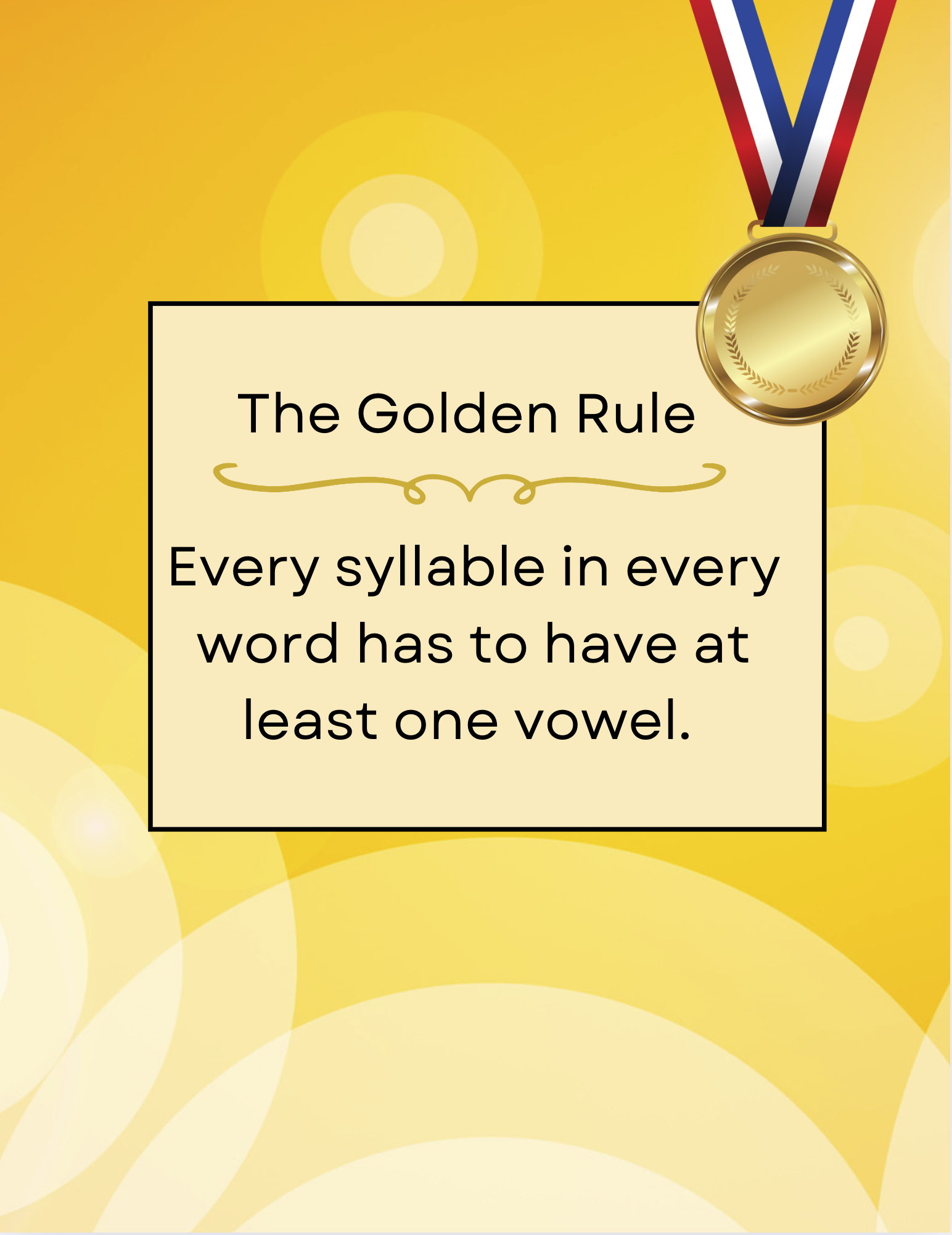
    The Golden Vowel Rule:

    The Golden Vowel Rule is the most important rule. There are a lot of reading and spelling rules, but all of those rules get broken frequently. This rule is the one rule that hardly ever gets broken.

    • One of the most effective ways to improve spelling is to segment words into syllables and make sure every syllable has at least one vowel.
    • Here is a post about vowels and consonants: https://thevowelcoach.com/?s=syllables

    Rule #2:

    The second rule forces kids to slow down and listen carefully in order to make better spelling choices.

    • Emphasize that when a vowel says its name in a word it usually has a way to spell its name in the word.
    • I have written individual posts for A, E, I, O and U. Here is my post for the vowel A:https://thevowelcoach.com/?s=vowel+a

    • Sorting pictures according to whether the letter is saying its name or sound is another strategy that will help the child slow down and make better spelling choices.

    • Accuracy is less important than the child demonstrating that he or she knows that the letter has to spell its name.
    • We know that “cape” is spelled with a magic e. If a child spells cape “caip” or “cayp,” the child is still showing us that he/she knows the vowel has to spell its name to say its name.

    Rule #3:

    Reading and spelling is all about listening to the sounds the letters are making.

    • As you say each letter of the alphabet, listen to hear if the vowel sound in the letter’s name is saying its long or short sound.

    Rule #4

    Rule number four reminds kids to “spell” the name of a consonant when the consonant says its name.

    • Long vowel spelling patterns help us spell the name of consonants in words.

  • Mat Man and Short Vowel Word Families

    Mat Man and Short Vowel Word Families

    Question #1:

    1. A word family is a group of words that all share a common root word. For example, the words bat, cat, hat and sat all share the root word “at.


    Question #2:

    2. Word families help your child sound out multisyllabic words more easily and improve rhyming and spelling skills.


    Question #3:

    3.Familiarity with short vowel sounds will make learning word families easier.


    Question #4:

    4. If you need more resources for teaching short vowel sounds, please check out this previous post:

    https://thevowelcoach.com/how-to-teach-short-vowel-sounds/


    Question #5:

    5. This video can help your child learn letter sounds:


    Mat Man

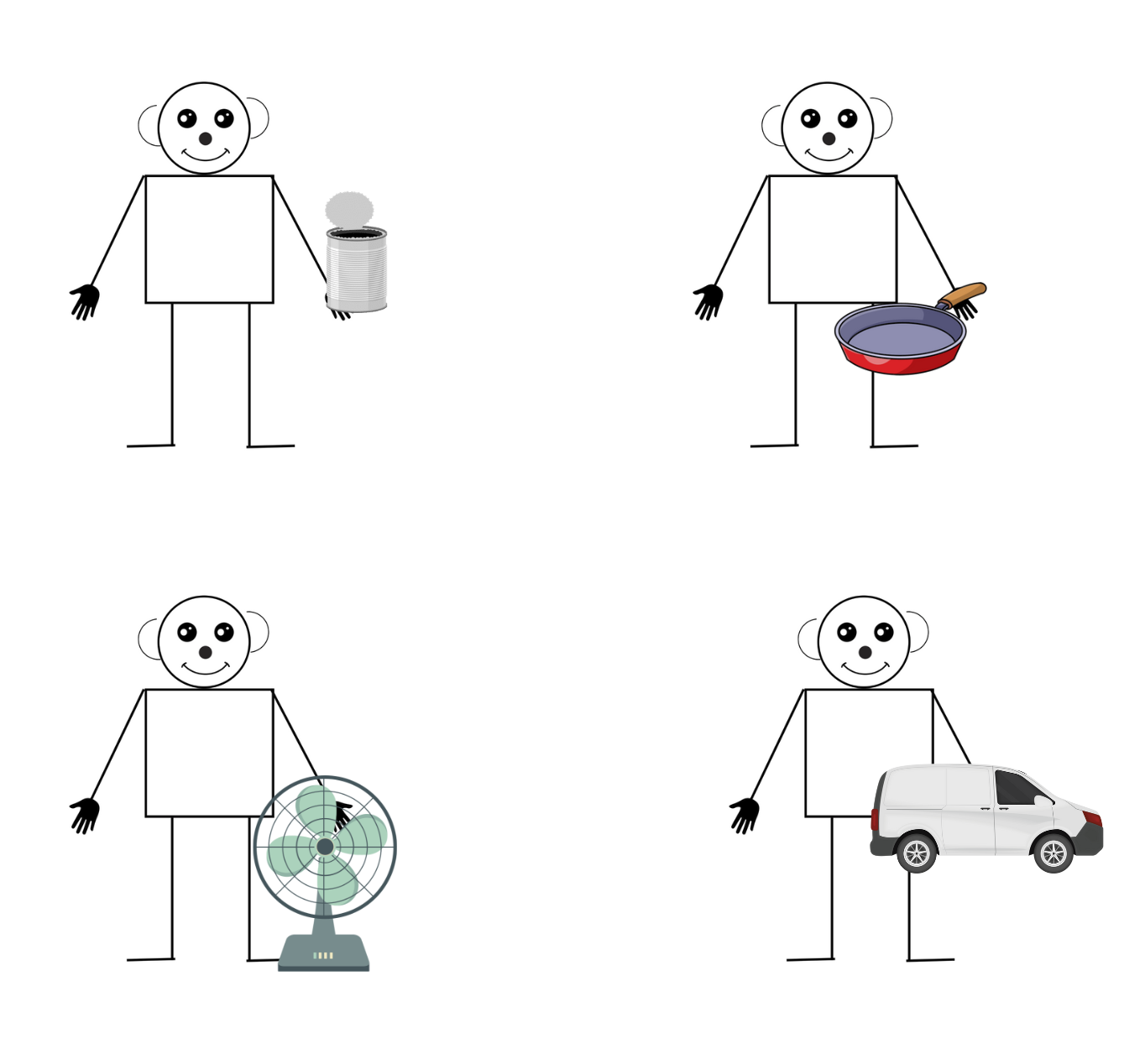
    I introduce word families with my friend Mat Man. Mat Man is a character from Handwriting/Reading without Tears, and he is assembled using the types of lines we use when we print letters.

    Kids love Mat Man. My students get very excited when we use Mat Man in a lesson.

    I teach online to kids across the country, so I must rely on drawing Mat Man. Here is the video I use:


    After we draw Mat Man, I give Mat Man some props. Then we make a list of those props:

    • hat
    • bat
    • rat
    • cat

    Mat, hat, bat, rat and cat all have “at” in common. They are all part of the “at” word family.


    • can
    • fan
    • pan
    • van

    Man, can, fan, pan, and van all have “an” in common. They are all part of the “an” word family.


    Here is a look at Man Man in the classroom:


    You can purchase a Mat Man kit here:

    https://shopping.lwtears.com/product/build-mat-man-kit/01t4V000007a32SQAQ

    You can learn more about Mat Man here:

    https://www.lwtears.com/blog/meet-mat-man?srsltid=AfmBOooEZ-GT4-ykIvHy0MtcWdfgj5SDcG4q_Bmf8zEO9p7EyLivq3DC


    Here is one more Mat Man song that my students really enjoy:


    After my kids meets Mat Man and have some fun with him, we move on to a word family rhyming activity. Do you remember this song from when you were in school?


    Banana Fana Rhyming

    After the song, we create some Banana Fana rhymes based on the word family of choice.


    Word Search

    Another fun activity is a root word word search. This type of activity gives the kids a chance to scan for little words inside strings of letters.


    My lessons always include songs and stories. Here are my word family favorites for short vowel word families:


  • Consonants and Vowels: Every Consonant Has a Vowel Sound in its Name.

    Consonants and Vowels: Every Consonant Has a Vowel Sound in its Name.

    • Today we are going to take a look at how consonants spell their names in words. When we say a consonant’s name, that name is the combination of at least two sounds. One is the letter’s sound, and the other is a long vowel sound or a short vowel sound.

    Say these consonant names out loud:

    They all contain the sound of long vowel e.


    Now say these consonant names out loud:

    They all contain the sound of short vowel e.

    .


    Understanding that vowels help consonants spell/say their names can be useful for children who struggle to spell.

    1. Say the word.

    • It’s important to have your child say the word out loud so that he or she can “feel” the sounds in his/her mouth.

    2. Stretch out the word sound by sound.


    3. If a consonant says its name, listen carefully for the sounds that make up that name.

    Your child might hear N say its name and think the word is spelled “snd.”

    If this happens, focus on the name of N and the sounds that are used to spell that name.


    4. Reinforce the golden rule of spelling:

    • Another thing we can do is ask the child if every syllable in the word has a vowel. When s/he notice “snd” is missing a vowel, we can help the child hear the vowel sound in the word.

    Below is a list of some of the common ways each letter can spell its name in a word:

    Learning to read can be fun. Be patient, give your child time to think, and turn learning into a game whenever you can.

  • The Importance of Teaching Short and Long Vowel Sounds- Why Vowels are The Most Important Letters in the Alphabet


    Vowels are to words what bones are to our bodies. They are the foundation for reading success.

    Phonemic awareness is the ability to identify and manipulate sounds. Vowel sounds are important for accurate reading and accurate spelling, but they are also tricky because they sound very similar to each other. For many students, the ability to identify and manipulate vowel sounds stalls their progress as readers and writers.


    Why are vowels so important?

    1. Every syllable in every word has to have at least one vowel. This is the one spelling rule that is very difficult to find rule breakers for. Examples:

    • ev-er-green
    • ab-ra-ca-dab-ra
    • Mi-chi-gan

    2. Many spelling rules are vowel dependent. 

    Examples:

    • Use tch after a short vowel and ch after a long vowel
    • In 1 syllable words use sc before a, o, and u, and use sk before i and e.
    • Use dge after a short vowel and ge after a long vowel or any other sound.

    3. Word families and common chunks usually start with a vowel.

    Examples:

    • an, ed, it, op, un

    4. Diphthongs start with a vowel.

    Examples:

    • au, ew, oi, 

    5. The name of every letter in the alphabet has a vowel sound in it. When you spell the name of the letter you usually need a vowel to spell the sound.

    Examples:

    • The name B in “because” is spelled “be.”
    • The name M in “December” is spelled “em.”
    • The name K in “okay” is spelled “kay.”
    • The name R in “park” is spelled “ar.”

    6. Long vowel sounds can be spelled in more than one way.

    Examples:

    • Long A= ai, ay, eigh, a-e
    • Long I= igh, i-e, ie, eye, -y, I

    7. Vowel rules get repeated. 

    Examples:

    • Magic e helps a, e, i, o, and u say their names. 
    • If two vowels are next to each other, the first one usually says its name

    Let’s get started!

    Here is a link to my favorite vowel song.


    Find tips for teaching short vowel sounds here:


    Find Tips for Long Vowel Sounds here:

  • How to Teach Short Vowel Sounds with Songs, Stories, and Art

    Today I am going to share the 6 steps I use to teach kids short vowel sounds. Think of each step as an ingredient in a recipe that can be personalized to match the needs of each student. Add more or less of an ingredient as needed. I teach vowels in the order A (long and short), E (long and short), I (long and short) and so on. I meet with students in 30 minute or 1 hour increments. How many steps we get through at a meeting varies from child to child.

    Here are my 6 steps for how to teach short vowel sounds:

    1. Listen
    2. Sort
    3. Read
    4. Spell
    5. Play
    6. Sketch

    STEPS 1-6 to teach short vowel sounds

    1: Listen

    I currently tutor kids in grades K-5 online in 1:1 and small group settings. We do not have shared books, so I rely heavily on a number of great free videos on YouTube.

    When I teach short vowel sounds to new readers or review short vowel sounds with more experienced kids, I always begin with a song.

    Short A song:

    Short E song:

    Short I song:

    Short O song:

    Short U song:

    2: Sort

    When I teach short vowel sounds, my second step is a sorting activity. When sorting pictures or words, I have the child listen to me say a word slowly and then repeat it back to me. I prefer to ask my students “Does the letter say its name or does it say its sound” rather than “Is it the long sound or the short sound.”

    3: Read

    When I teach short vowel sounds, I want my kids to practice reading words with those sounds. Like I said, I work with kids online, and we do not have shared books to work form. Luckily, YouTube is a great source for free material.

    I like to let my students watch the short vowel sound story for the letter we are working on first. After that, I mute the sound and then replay the story or click through the story slowly and give the child a chance to read the words. My students love these videos.

    Short A Story:

    Short E Story:

    Short I Story:

    Short O Story:

    Short U Story:


    4. Spell

    When I am teaching short vowel sounds, I want to provide my students an opportunity to spell words with that sound. For each word, I stretch the sounds out slowly and listen to the child do the same. I have the child count how many sounds she/he hears in the word. Then I draw a box for each sound and have the child add (or trace) the letter he or she hears as we sound it out again. 

    • Short A Words: cat, man, tap, land
    • Short E Words: net, bed, leg, vest
    • Short I Words: sit, lid, pin, tip
    • Short O Words: hot, mop, spot, job
    • Short U Words: run, cub, shut, hug

    5. Play

    Another activity I use when I teach short vowel sounds (or any skill) is a memory game. I’ve never come across a kids who did not want to play a memory game! I usually use pictures for the first few memory games but quickly move on to words.

    6. Sketch

    My last step when teaching short vowel sounds involves a little art. Most kids enjoy following along with the videos.

    Vowel A Sketch:

    Vowel E Sketch:

    Vowel I Sketch:

    Vowel O Sketch:

    Vowel U Sketch: