Today’s link: https://canva.link/sbkf2b7mbxqnwfy
Tag: vowels
-
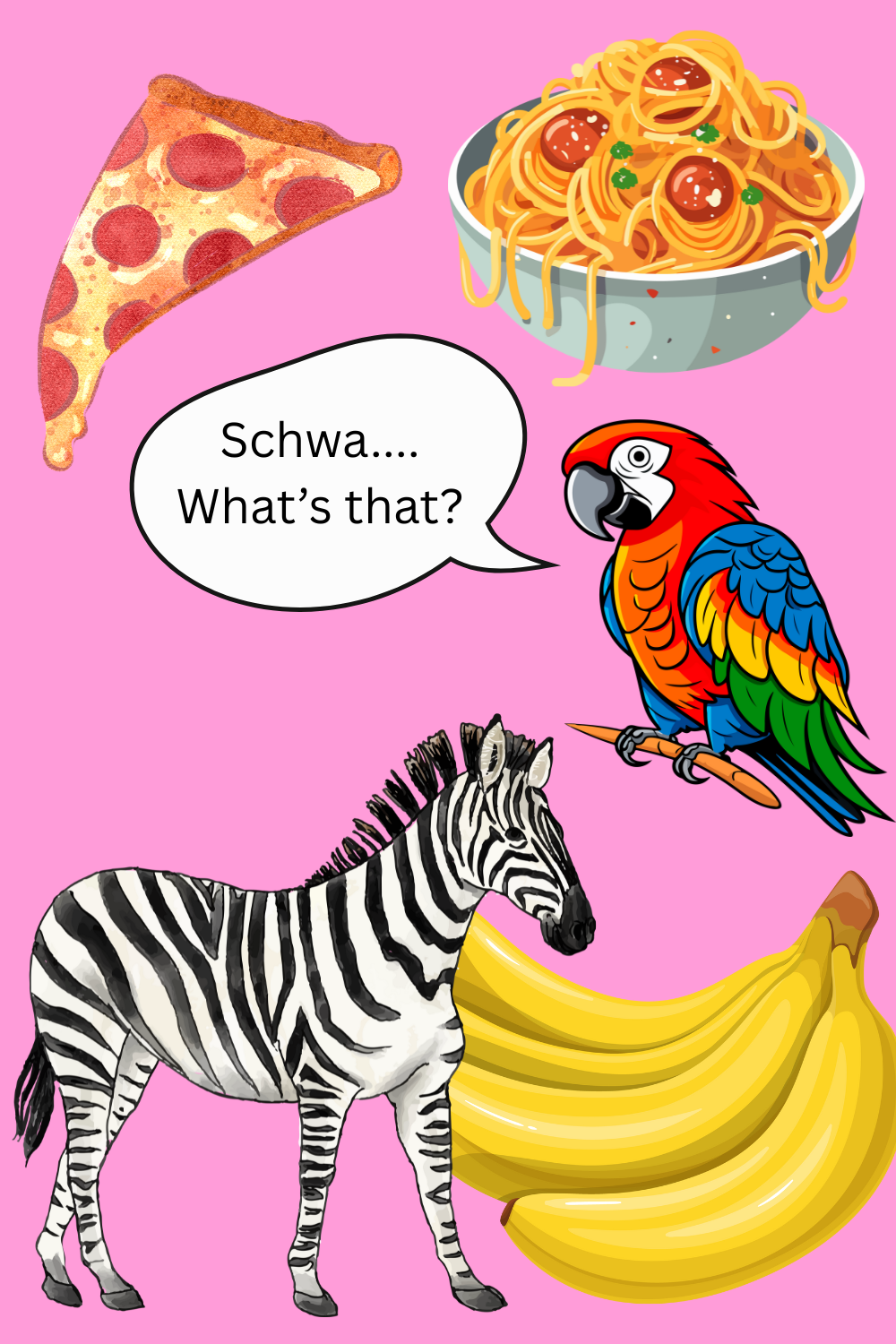
Schwa: It’s the vowel sound that is easy to say but hard to spell.
The “schwa” sound sounds like a short vowel u. It is often referred to as the lazy sound (uhhh…).
Read the following words:
- pizza
- banana
- granola
- salsa
- boa
- about
- amount
- ago
- away
- award
- zebra
- balloon
- alphabet
- magazine
Now read these words:
- the
- camel
- nickel
- novel
- telephone
And these:
- bottom
- carrot
- freedom
- parrot
- gallon
- cover
- action
- portion
- lotion
- ribbon
Uhhh…. what’s going on here?
Welcome to the “schwa” sound.
The schwa sound sounds a lot like short vowel u, but it can make a short i sound as well. Any vowel can make the shwa sound, which makes spelling tricky for everyone, especially kids. English accents and pronunciations of words vary. When I say “pencil,” I can hear the short i sound. However, a lot of people pronounce the i like a short u sound, so it sound like “pensul.” The same goes for “family.” Some people will say it with a distinct short i sound, and some people will say it as if it is spelled “famuly,” and some people will pronounce it “famly.”
Phonics Hero explains the schwa sound here:
Schwa Tricks:
I don’t have any tricks for which vowel to use to make a schwa sound in a given word. I think that knowing how to spell the schwa sound comes with a lot of reading and spelling practice. If you know any tricks for kids, please let me know!
Extension Ideas
When I work on schwa with my students, I share this poem by Shel Silverstein:

- I use the word “boa” as an introduction to schwa.
- What schwa foods can a boa eat? pizza, banana, granola, salsa, carrots, pasta…
-
Listen to the Vowel: 4 Vowel Rules Kids Need to Know
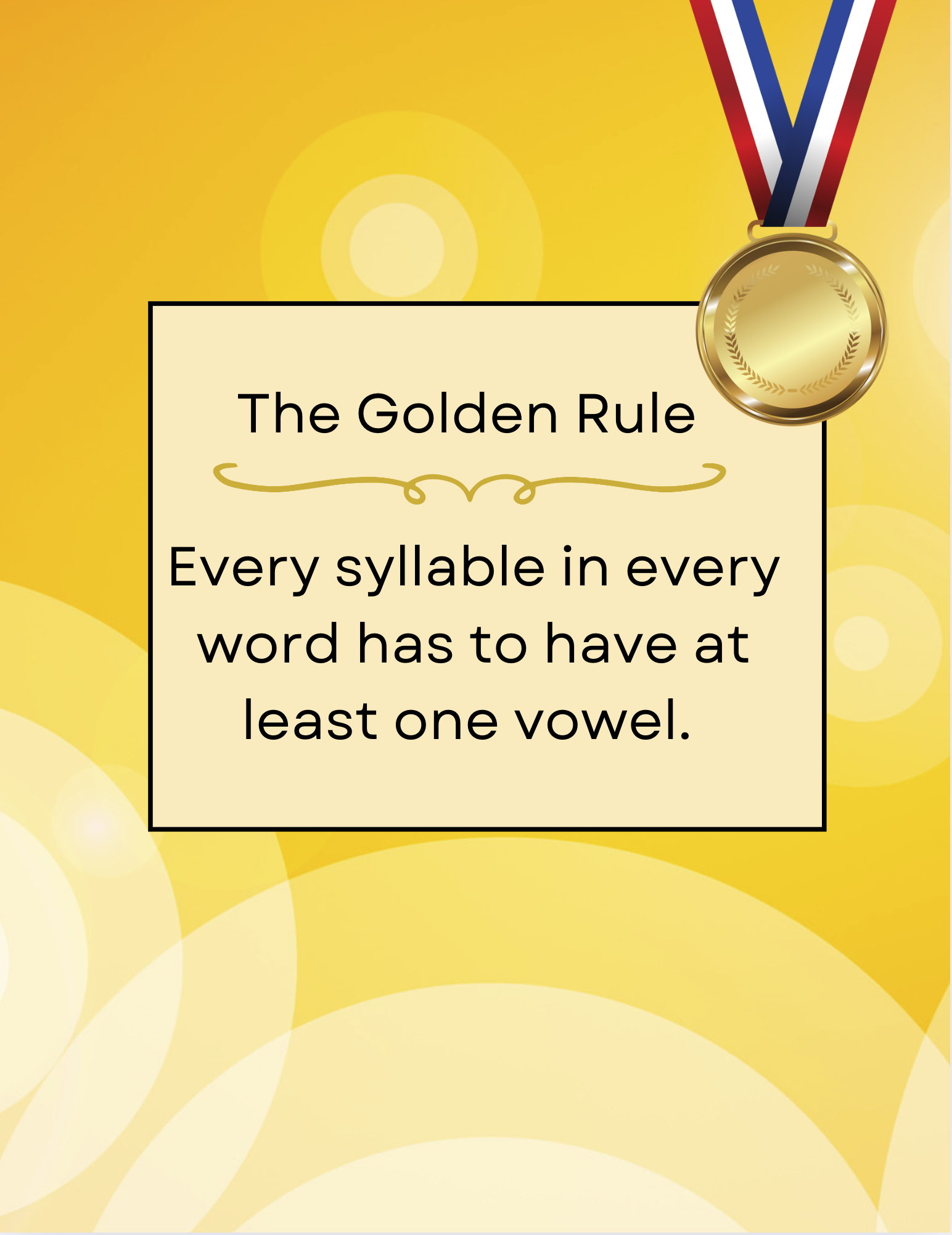
The Golden Vowel Rule:

The Golden Vowel Rule is the most important rule. There are a lot of reading and spelling rules, but all of those rules get broken frequently. This rule is the one rule that hardly ever gets broken.

- One of the most effective ways to improve spelling is to segment words into syllables and make sure every syllable has at least one vowel.
- Here is a post about vowels and consonants: https://thevowelcoach.com/?s=syllables
Rule #2:

The second rule forces kids to slow down and listen carefully in order to make better spelling choices.

- Emphasize that when a vowel says its name in a word it usually has a way to spell its name in the word.
- I have written individual posts for A, E, I, O and U. Here is my post for the vowel A:https://thevowelcoach.com/?s=vowel+a

- Sorting pictures according to whether the letter is saying its name or sound is another strategy that will help the child slow down and make better spelling choices.
- Accuracy is less important than the child demonstrating that he or she knows that the letter has to spell its name.
- We know that “cape” is spelled with a magic e. If a child spells cape “caip” or “cayp,” the child is still showing us that he/she knows the vowel has to spell its name to say its name.

Rule #3:

Reading and spelling is all about listening to the sounds the letters are making.

- As you say each letter of the alphabet, listen to hear if the vowel sound in the letter’s name is saying its long or short sound.
Rule #4
Rule number four reminds kids to “spell” the name of a consonant when the consonant says its name.

- Long vowel spelling patterns help us spell the name of consonants in words.


-
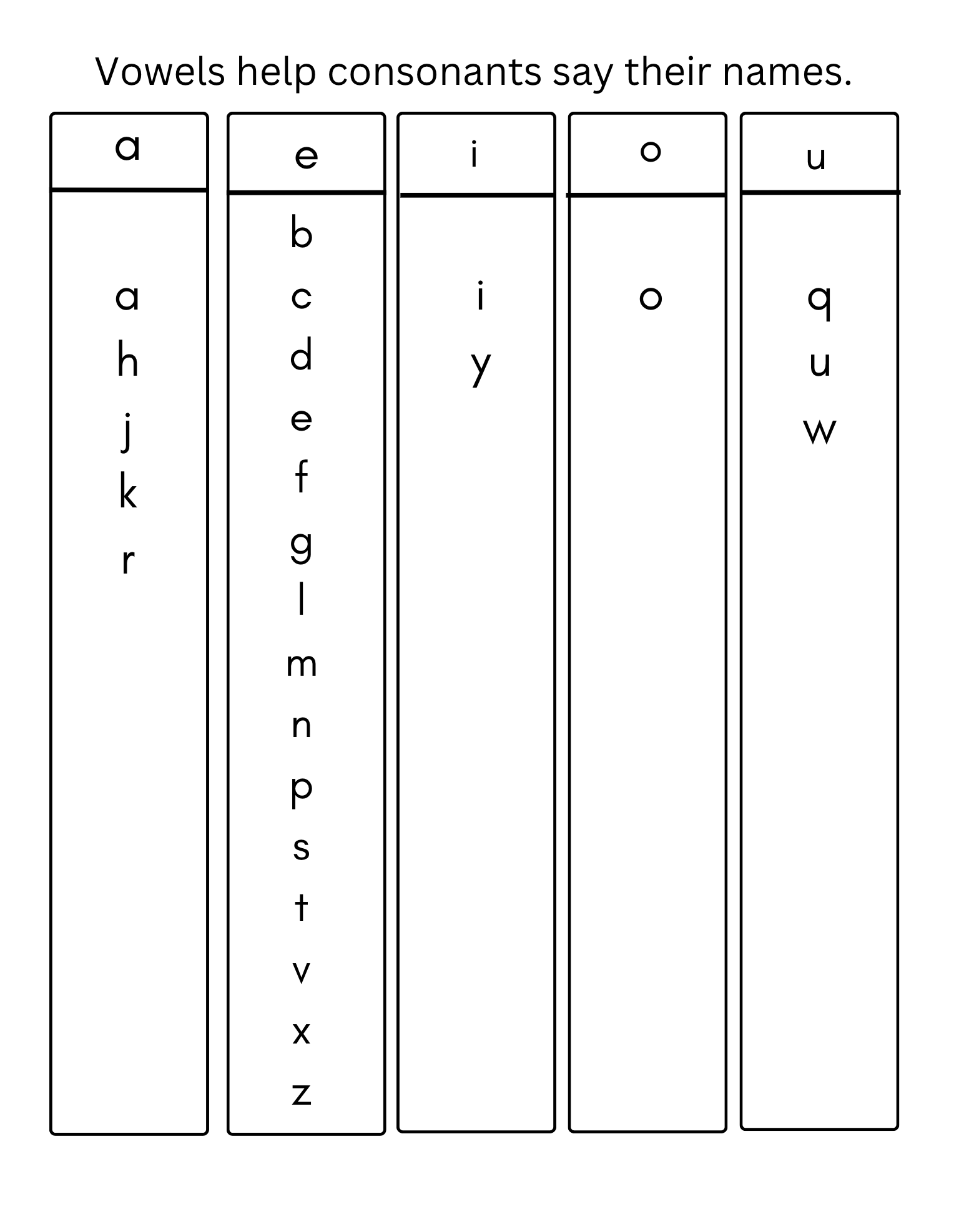
Consonants and Vowels: Every Consonant Has a Vowel Sound in its Name.
- Today we are going to take a look at how consonants spell their names in words. When we say a consonant’s name, that name is the combination of at least two sounds. One is the letter’s sound, and the other is a long vowel sound or a short vowel sound.
Say these consonant names out loud:

They all contain the sound of long vowel e.
Now say these consonant names out loud:

They all contain the sound of short vowel e.
.

Understanding that vowels help consonants spell/say their names can be useful for children who struggle to spell.
1. Say the word.

- It’s important to have your child say the word out loud so that he or she can “feel” the sounds in his/her mouth.
2. Stretch out the word sound by sound.

- My students enjoy this stretchy song: https://www.youtube.com/watch?v=xIBjAWkPzNA
- Sound boxes are another helpful tool for stretching out words. https://thevowelcoach.com/sound-box-strategy-for-beginning-and-struggling-spellers/
3. If a consonant says its name, listen carefully for the sounds that make up that name.

Your child might hear N say its name and think the word is spelled “snd.”
If this happens, focus on the name of N and the sounds that are used to spell that name.
4. Reinforce the golden rule of spelling:

- Another thing we can do is ask the child if every syllable in the word has a vowel. When s/he notice “snd” is missing a vowel, we can help the child hear the vowel sound in the word.
Below is a list of some of the common ways each letter can spell its name in a word:


Learning to read can be fun. Be patient, give your child time to think, and turn learning into a game whenever you can.